
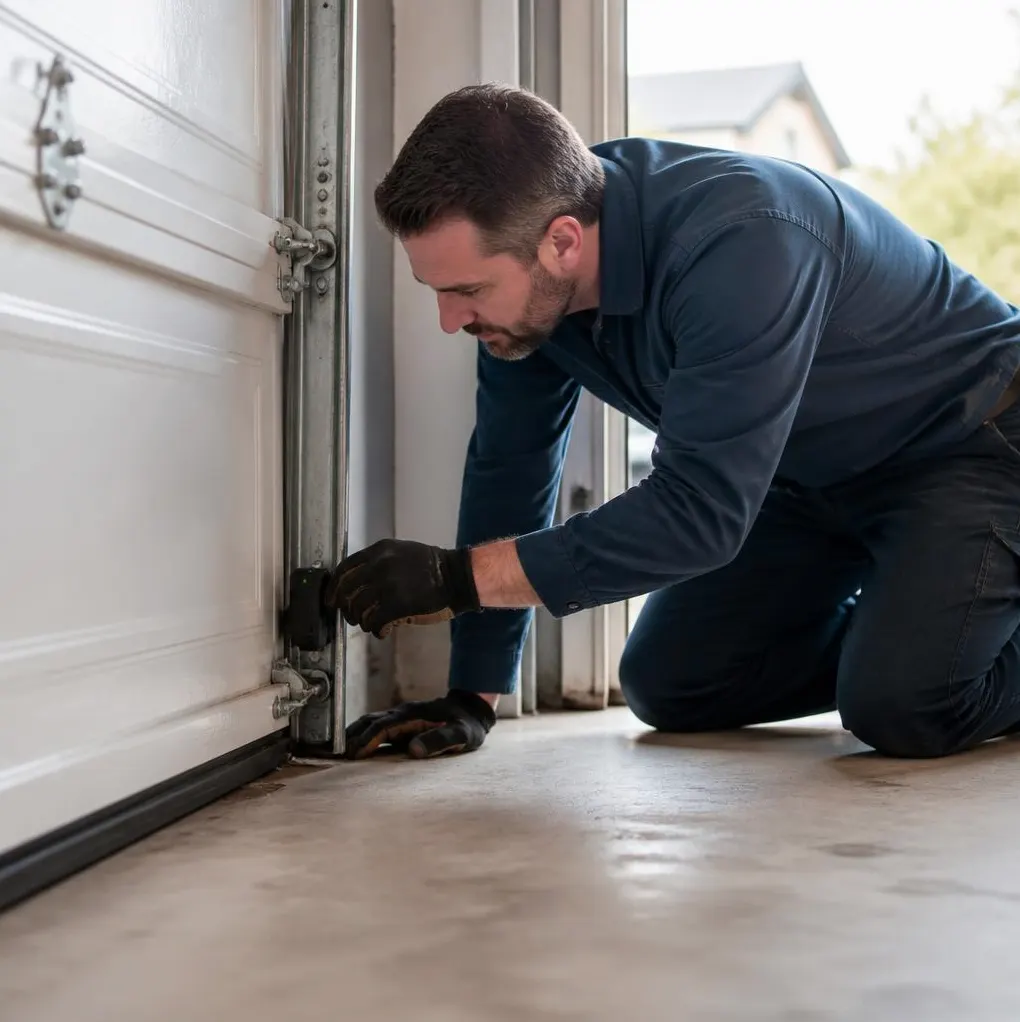
The Cost of Waiting Another Season
Skip a pre-winter check on your garage door and you're not just gambling on convenience — you're gambling on your whole garage. A door that buckles under wind pressure can tear loose from its tracks, let snow and freezing air flood a space full of pipes and wiring, and in bad cases contribute to roof or wall damage once wind gets inside the structure. Compare that to the cost of an hour spent on inspection and a few worn parts replaced now, while you can still schedule service on your own timeline instead of during an emergency call in a windstorm or a hard freeze.
Why the Garage Door Is a Home's Weakest Wall
Every other exterior wall on your house is a solid, fastened assembly of studs, sheathing, and siding. Your garage door is the opposite: it's the largest opening in the building envelope, held together by rollers, tracks, hinges, and springs instead of nails and studs. When wind hits a house, pressure builds on the windward side and drops on the leeward side. A solid wall shrugs this off. A garage door, especially an older or lightweight one, can flex, bow, or blow inward under that same pressure. Once it fails, wind pours into the garage and pushes outward on the roof and walls from the inside — which is why engineers consistently flag garage doors as the weak point in a home's wind defense.
What This Time of Year Brings to Local Garage Doors
South Jordan's climate puts a door through a lot between now and spring. Cold, snowy winters are on the way, nighttime temperatures drop fast after warm days, the air stays dry most of the year, and the intense altitude sun bakes exposed rubber and plastic even in cooler months. Each of these stresses a different part of the door.
Wind Events
Canyon and frontal wind events are a normal part of fall and winter along the Wasatch Front, and garage doors facing open yards, corner lots, or unobstructed approaches take the brunt of it. Gaps around the door, a sagging track, or a door without reinforcing struts are all invitations for wind to find a weakness.
Freeze-Thaw and Day-Night Swings
Big day-to-night temperature swings mean metal tracks and panels expand in the afternoon sun and contract hard overnight. Over a season, that constant flexing loosens bolts, warps thin panels, and can throw an otherwise fine door slightly out of alignment.
Dry Air and UV Exposure
Dry air dries out factory lubricant on rollers and hinges faster than in humid climates, and the strong high-altitude sun breaks down rubber weatherstripping and photoelectric sensor housings. A seal that looks fine from a few feet away may already be cracked and letting in drafts, dust, and moisture.
Leftover Hail Damage
If summer hail left small dents or dings in panels, those spots are weaker now than the surrounding metal. They're worth catching before winter loads the door with cold-stiffened steel and wind pressure on top of existing damage.
A Pre-Winter Storm Checklist
- Inspect panels for hail dents, dings, or rust spots, especially near the bottom where road salt and moisture collect.
- Check weatherstripping along the bottom and sides for cracking, gaps, or stiffness — a brittle seal won't flex in a freeze and won't block wind-driven snow.
- Test the auto-reverse safety feature by placing a block under the door and running it down; it should stop and reverse on contact.
- Look at the springs for rust, visible gaps between coils, or uneven stretching — springs under tension are also under more stress in cold temperatures.
- Lubricate rollers, hinges, and tracks with a garage-door-specific lubricant rather than a general spray, since dry air speeds up how fast standard lubricants evaporate or gum up.
- Check for wind bracing on the door's interior, particularly if the opening faces an exposed approach with little wind break from fences, trees, or neighboring structures.
- Confirm the opener has battery backup so you're not stuck with a dead opener during a power outage mid-storm.
- Realign photoelectric sensors if the sun has shifted their housing or the brackets have loosened from temperature cycling.
When to Call South Jordan Garage Door
Some of this is a weekend project. Other symptoms mean it's time to call in a technician: a door that visibly bows or rattles hard in wind, a spring that's rusted through or unevenly stretched, panels that are dented enough to flex when pushed, or an opener that's lost its backup power and reliability. If a spring looks compromised, don't try to adjust or remove it yourself — our Spring Replacement service handles that under controlled tension with the right tools, and it's one of the most common pre-winter calls we get. For a full once-over before storm season, our Garage Door Maintenance service checks tracks, rollers, bracing, seals, and opener function in one visit, so you're not guessing which part is going to fail first.
If you're in South Jordan, West Jordan, Riverton, Herriman, Draper, Sandy, Bluffdale, or Taylorsville and want your garage door ready before the next windstorm or cold snap rolls through, call South Jordan Garage Door today to schedule an inspection.